

The NYC Ferry has been running since 2017 and still gets treated like a secret by a large portion of the city's population. Millions of subway riders have never stepped on one, in part because the ferry doesn't appear prominently in transit discussions and in part because its routes don't replicate what the subway does — they serve gaps in the subway network. Understanding when the ferry is useful requires knowing where those gaps are.
Explora Nueva York en vivo
See the city en tiempo real on the NYC Live Command Center , 900+ live NYCDOT cámaras de tráfico across the cinco boroughs, on one screen.
Abra el panel en vivoCómo funciona el sistema de ferry de Nueva York
NYC Ferry se opera bajo la marca NYC Ferry a través del gobierno de la ciudad, a diferencia del Staten Island Ferry (que es operado directamente por la ciudad y es gratuito) y el servicio NY Waterway (un ferry de cercanías privado que opera desde Nueva Jersey y algunos otros puntos).
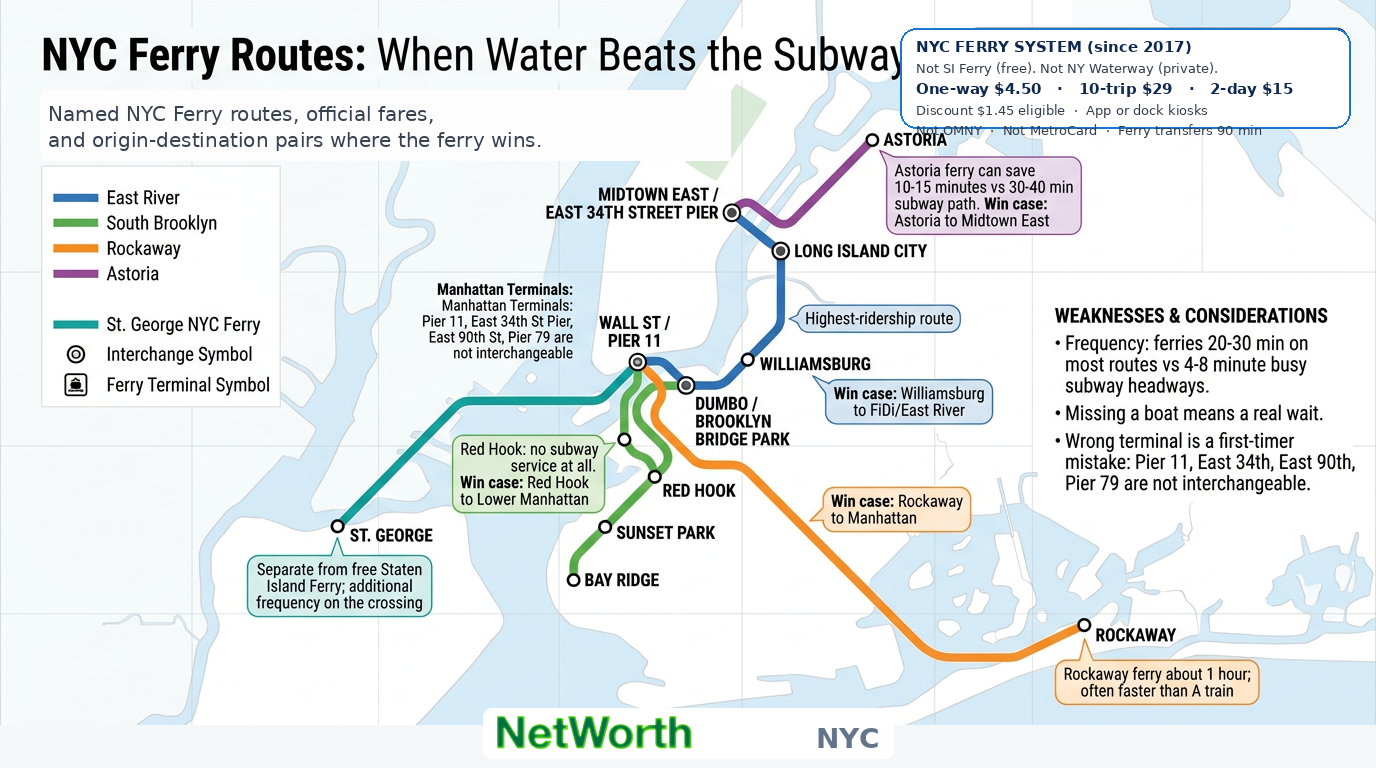
NYC Ferry charges a flat one-way fare of $4.50 on all routes (confirm current pricing on ferry.nyc). A 10-trip pass is $29, and an unlimited 2-day pass is $15 in the app. Eligible riders can use the Ferry Discount Program at $1.45 one-way. Tickets are sold in the NYC Ferry app and at dock kiosks. NYC Ferry does not use OMNY or MetroCard. Free transfers apply between NYC Ferry routes within 90 minutes.
El sistema recorre varias rutas con nombres y cada una sirve a una parte diferente del paseo marítimo:
Ruta del Río Este: Corre entre Wall Street/Pier 11 en Lower Manhattan y DUMBO/Brooklyn Bridge Park en Brooklyn, con paradas que incluyen Williamsburg y Long Island City en Queens. Esta es la ruta con mayor número de pasajeros y la que la mayoría de los neoyorquinos conocen. Sirve a vecindarios donde el acceso del metro a Manhattan es indirecto o requiere conexiones.
Ruta Brooklyn Sur: Serves the Brooklyn waterfront neighborhoods further from the main subway lines , Bay Ridge, Sunset Park, Red Hook, and others. Red Hook in particular has no subway service at all, making the ferry its primary transit connection to the rest of the city.
Ruta Rockaway: Conecta los Rockaways en Queens con Lower Manhattan. El viaje dura aproximadamente una hora, lo que parece largo si lo comparamos con la alternativa del metro, que requiere el tren A y dura mucho más tiempo. Para las personas que viajan hacia o desde Far Rockaway, el ferry suele ser más rápido y cómodo.
Ruta Astoria: Conecta Astoria, Queens con Midtown East Manhattan. Astoria a Midtown en metro requiere tomar el tren N o W y dependiendo de las conexiones puede tomar entre 30 y 40 minutos. El ferry cubre directamente el tramo del East River.
St. George, ruta Staten Island (ferry de Nueva York): Separado del ferry Staten Island, este conecta St. George con Lower Manhattan con un horario diferente y algunas paradas diferentes. El ferry Staten Island sigue siendo la opción gratuita y generalmente es la preferida por su costo, pero el ferry de Nueva York ofrece frecuencia adicional en este cruce.
Cuando el ferry es más rápido que el metro
El ferry gana a tiempo para pares de origen-destino específicos donde la ruta del metro es indirecta:
- Red Hook hasta Lower Manhattan: Ningún metro llega a Red Hook. Las alternativas de autobús son lentas. El ferry es la mejor opción.
- Williamsburg a Lower Manhattan: el tren L funciona pero termina en 8th Avenue en Manhattan. Si su destino está en el distrito financiero o cerca del East River, el ferry al muelle 11 puede ser más directo.
- Astoria a Midtown East: Dependiendo de dónde esté en Astoria y dónde en Midtown East, el ferry puede ahorrar entre 10 y 15 minutos.
- Rockaway a Manhattan: el ferry es consistentemente más rápido que el tren A para este corredor.
The ferry is slower than the subway for most Midtown-to-Midtown or local borough trips. It's a waterfront mode that specifically serves the areas where the subway network hasn't invested.
La experiencia del ferry versus el metro
The functional difference is significant. A subway car on a crowded weekday morning is a specific kind of experience. The ferry provides an outdoor deck, views of the harbor and skyline, and a slower pace that some commuters value enough to take slightly longer trips.
The ferry is also less crowded than equivalent subway lines at peak hours. Service frequency is lower than the subway (ferries run every 20-30 minutes on most routes, compared to 4-8 minute headways on busy subway lines), so missing a boat means a real wait. This frequency gap is the ferry's main operational weakness.
Planificación del horario del ferry
Unlike the subway, the ferry runs on a fixed schedule that you need to check before arriving at the terminal. The MTA real-time system tracks subway positions continuously; the ferry departs at specific times and won't wait. Missing a ferry by two minutes means waiting for the next one.
The NYC Ferry app and website publish schedules for each route. The NYC Live Command Center's Transportation panel also shows ferry status and scheduling information alongside MTA subway alerts, making it a convenient single place to check both transit modes before heading out.
En qué se equivocan la mayoría de los usuarios primerizos
Dos errores comunes en los primeros viajes en ferry:
Arriving at the wrong terminal. Several Manhattan terminals exist (Pier 11, East 34th Street Pier, East 90th Street, Pier 79 on the West Side). Knowing which terminal your route uses before leaving is essential , these are not interchangeable walk-up stops the way subway stations are.
Sin tener en cuenta el clima. La cubierta abierta es agradable con un tiempo templado y miserable con lluvia o viento frío. La cubierta inferior cerrada existe pero se llena. Los viajeros de invierno en ferry en Nueva York son una población que se autoselecciona y que realmente lo prefiere.
*The NYC Live Command Center's Transportation panel shows live MTA and NYC Ferry status alongside camera feeds across the five boroughs.*